ACLSMED™ works alongside the people who actually teach resuscitation: course instructors, simulation lab managers, and healthcare educators who bring ACLSMED™ SIM and ACLSMED™ CPR into their classrooms. This series tells their stories. If that sounds like you, get in touch and we may feature you next.
Every resuscitation educator has an origin story. For Christian Sunga, RN, CCAA, founder of CPR With RN Christian Inc., it starts with a patient he did not know how to help.
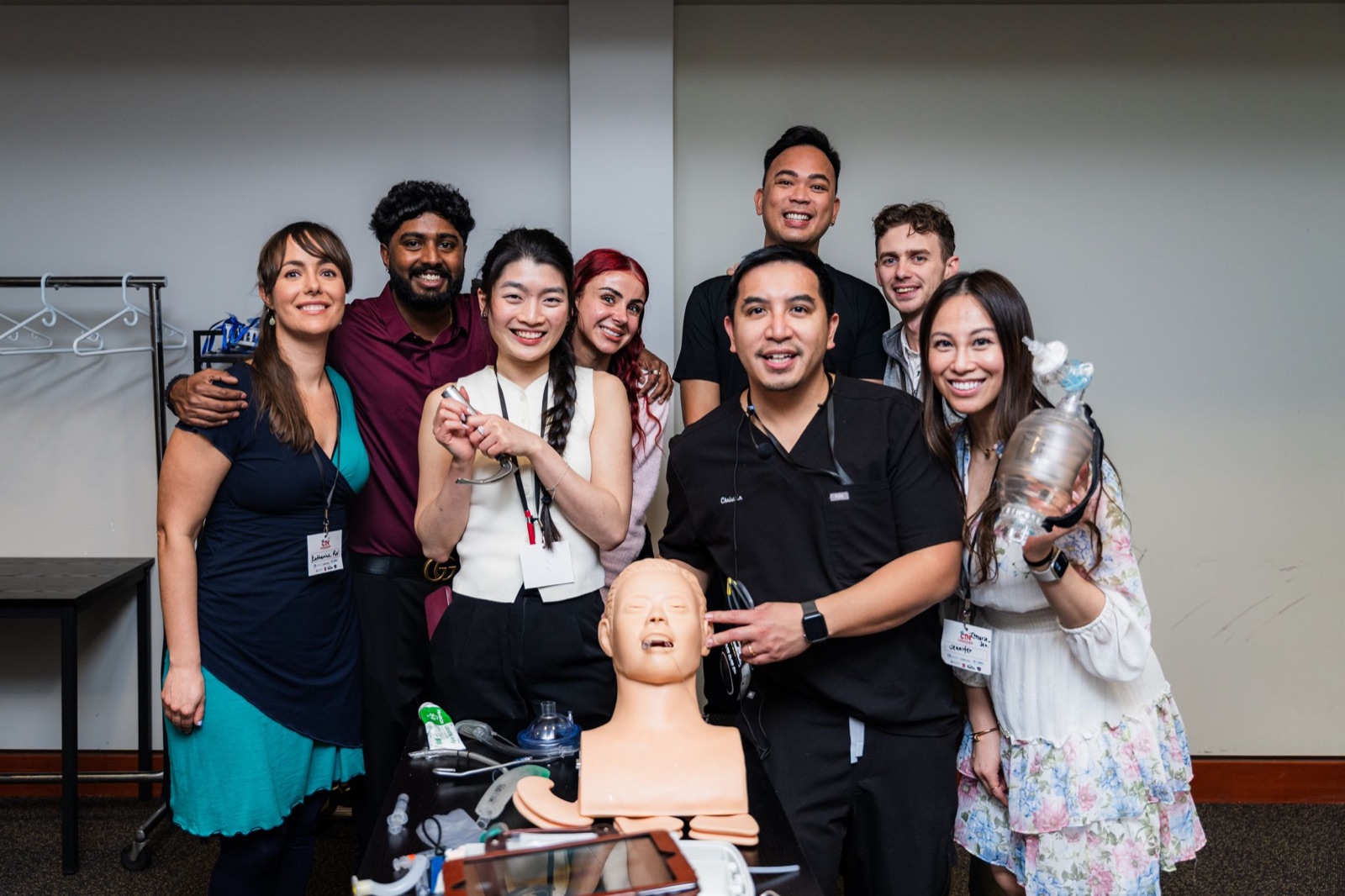
The vow
In his first month as a nurse, Christian was caring for a patient with shortness of breath. The patient deteriorated and went into cardiac arrest. Christian froze. He did not know what to do.
"At that moment, I made a vow to myself that it would never happen again."
He kept the vow the way clinicians keep any vow: with repetitions. Every time a code blue was called on the ward, or in the neighboring cath lab, Christian was there, learning everything he could about the CPR process.
Building the toolkit
Months later he became cardiac step-down trained, where the algorithm stopped being an abstraction. He learned ACLS medications, defibrillation, pacing, and cardioversion. From there he moved into the cath lab, covering STEMI cases and emergency bradycardia pacemaker insertions.
The pull of resuscitation kept getting stronger. He joined the code blue team, then the cardiac ICU. Each step put him closer to the patients whose hearts were actively trying to quit, and to the teams responsible for changing their minds.
The front of the room
Eventually Christian found joy in teaching and became a clinical instructor. He remembers his first ACLS classes being intimidating, for him as much as for the learners. Since 2019 he has been refining the same formula: classes that are fun, applicable, and low stress.
That last word is the deliberate one. Christian froze at his first arrest because pressure without preparation is exactly the wrong training environment. His classroom flips it: keep the stress low, make the reps count, and let the confidence come from repetition instead of adrenaline.
He has not left the bedside either. Christian still practices as an Anesthesia Assistant and picks up nursing shifts from time to time. The person at the front of the room still works where the algorithms get used.
Fun. Applicable. Low stress.
- Freezing once is forgivable. Staying frozen is a choice: show up to the next code.
- Learn the whole system, not just compressions: drugs, defibrillation, pacing, cardioversion.
- Keep the classroom low stress. Adrenaline is for the real thing; repetition is for the classroom.
- Stay clinical. The best instructors still practice where the algorithms get used.
CPR With RN Christian Inc. · Christian Sunga, RN, CCAA · Heart and Stroke ACLS, PALS & BLS Instructor
Book a class: cprwithchristian@gmail.com · 365-739-7CPR (277)
If you have taken one of Christian's classes, take a minute and leave him a Google review. Reviews are how independent instructors keep their classrooms full.
Your first megacode should not be your first megacode
Christian's story starts with freezing at a real arrest, because the first one is never like the textbook. Put the reps in before the pressure: ACLSMED™ SIM for the full code-team simulation, and ACLSMED™ CPR free for compression quality.
 ACLSMED™ SIM
The full Clinical Suite — Patient Monitor, Instructor Remote, IVmed pump, and RESPmed ventilator, running AHA-2025 MegaCode scenarios across the tablets in your sim room.


 ACLSMED™ CPR
The free CPR compression-quality trainer — live rate, depth, and hands-on-time coaching in red / yellow / green. No account, no ads. Pairs peer-to-peer with an ACLSMED™ SIM tablet for up to six learners at once.